
AN EXTRAORDINARY ARTIST.
# A, B, C + D. (A for Art.)

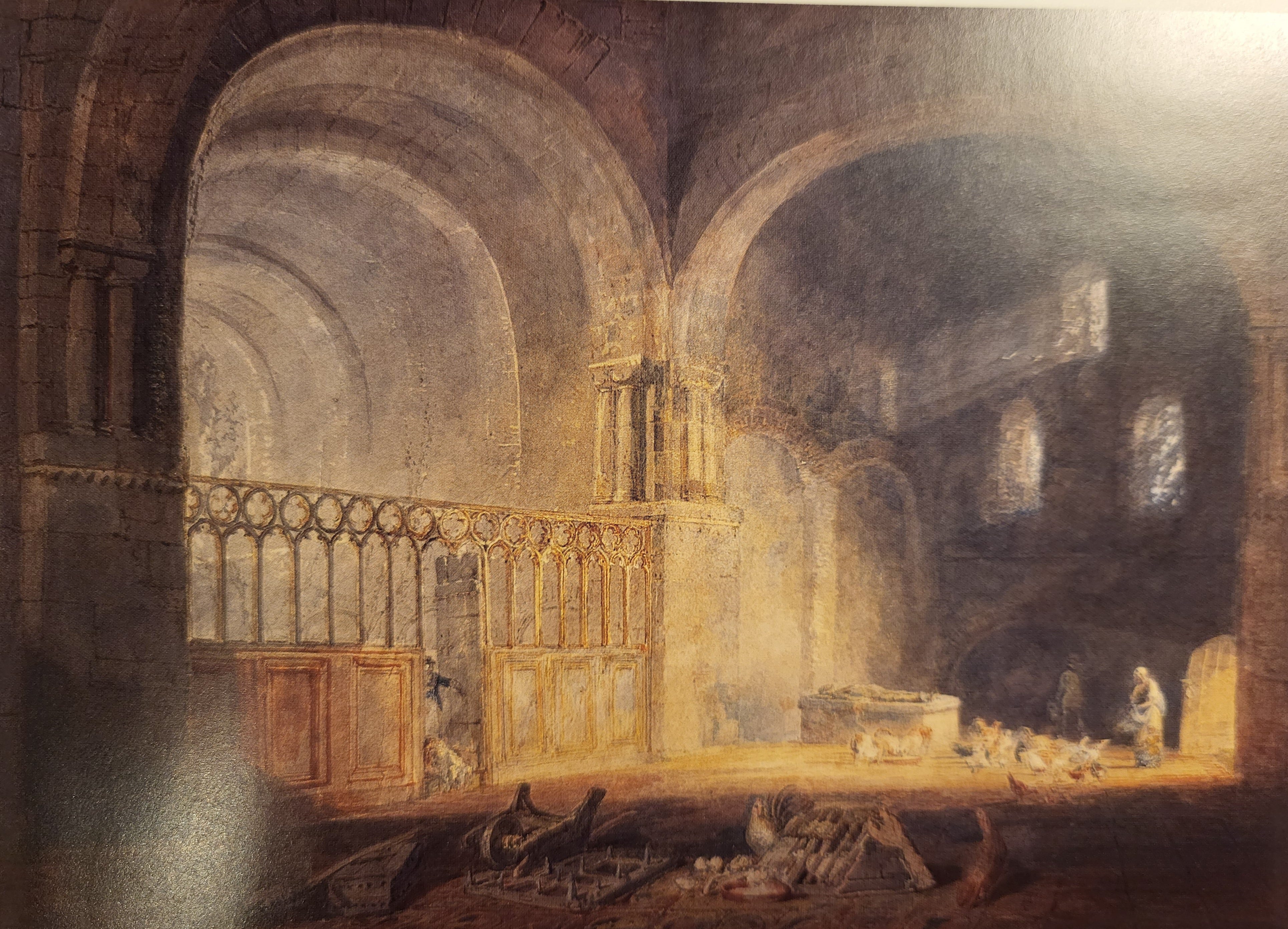
Transept of Ewenny Priory, Glamorganshire. c1797.
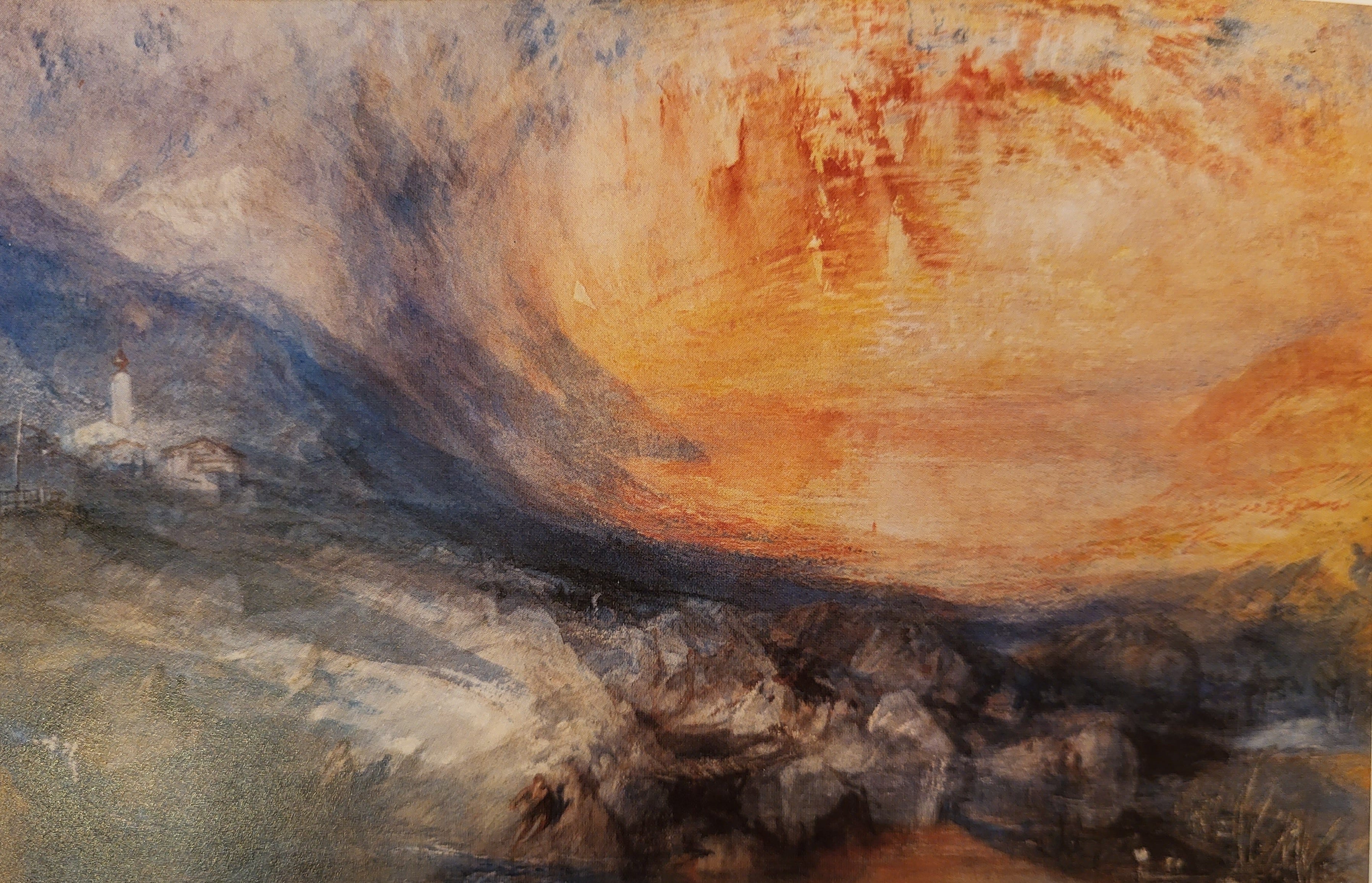
Goldau. 1843.
Joseph Mallord William Turner, 23rd April 1775 - 19th December 1851.
Turner, named after his Mothers Brother, J.M.W. Marshall, was the son of William Turner, a barber & wig maker, and Mary Marshal. From his early teens Turner showed a talent that led to him being one of Britain’s most esteemed painters. He developed an unusual style of melancholy imagery that suggested moisture in the air, mist, rain or sea spray. He was something of a recluse, an eccentric, preferring painting to people. Perhaps this was a result of his mother’s mental struggles, she spent the last 29 years of her life in asylums
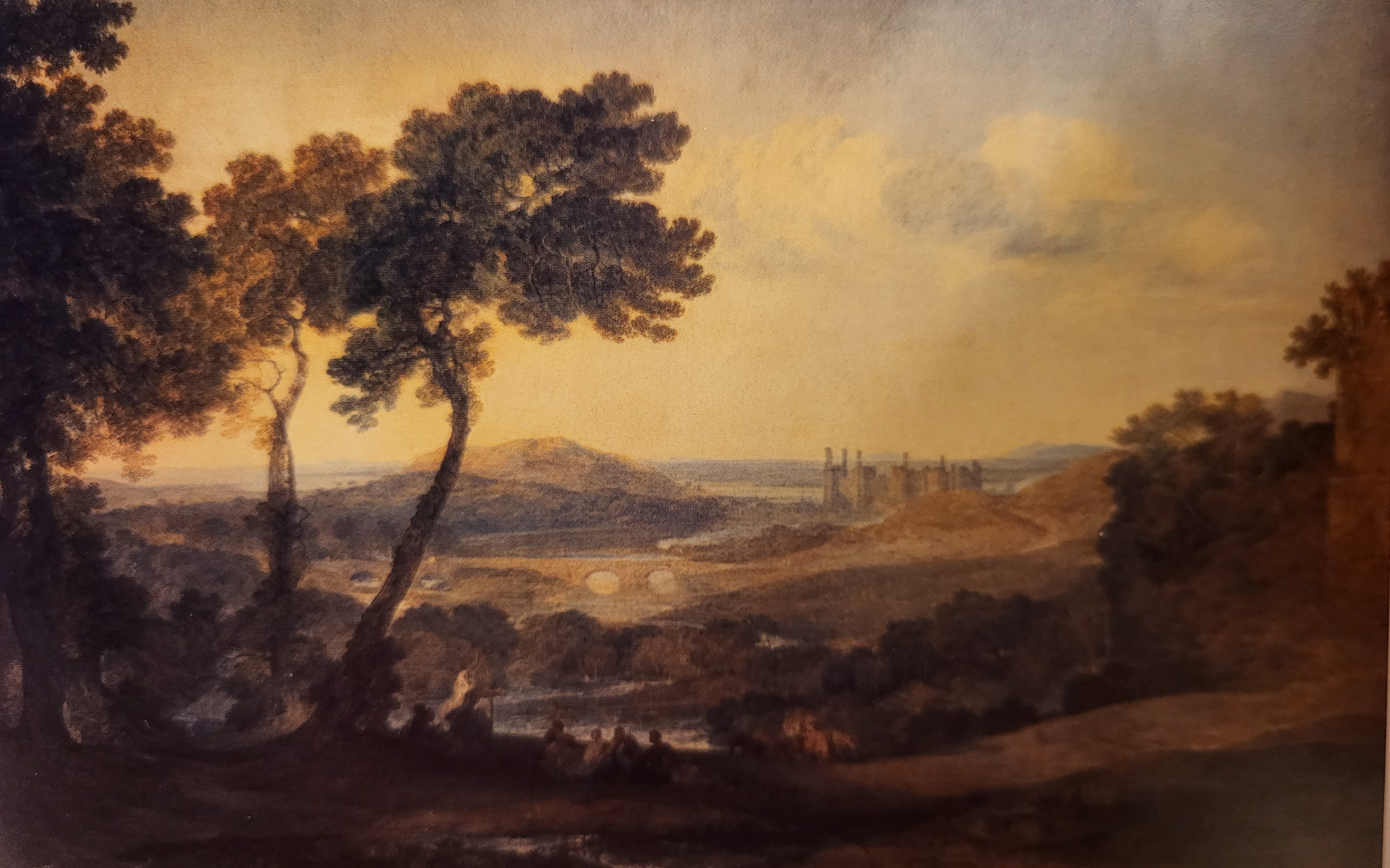
Caernavon Castle, North Wales. c.1800.
Encouraged by his father, Turner sold his works initially via the barber shop window, the older man eventually becoming the son’s assistant. Architects were happy to support the lad with exercises in perspective. He became a pupil of Thomas Mallory, a topographical draughtsman, who taught him the skills of coloring outline prints. At the age of 15 he painted “A view of the Archbishop’s Palace at Lambeth”, the first of many such watercolors he exhibited at The Royal Academy where, he quickly gained a reputation for mastery of the craft. He progressed into oils, achieving fame as a gifted maritime painter.
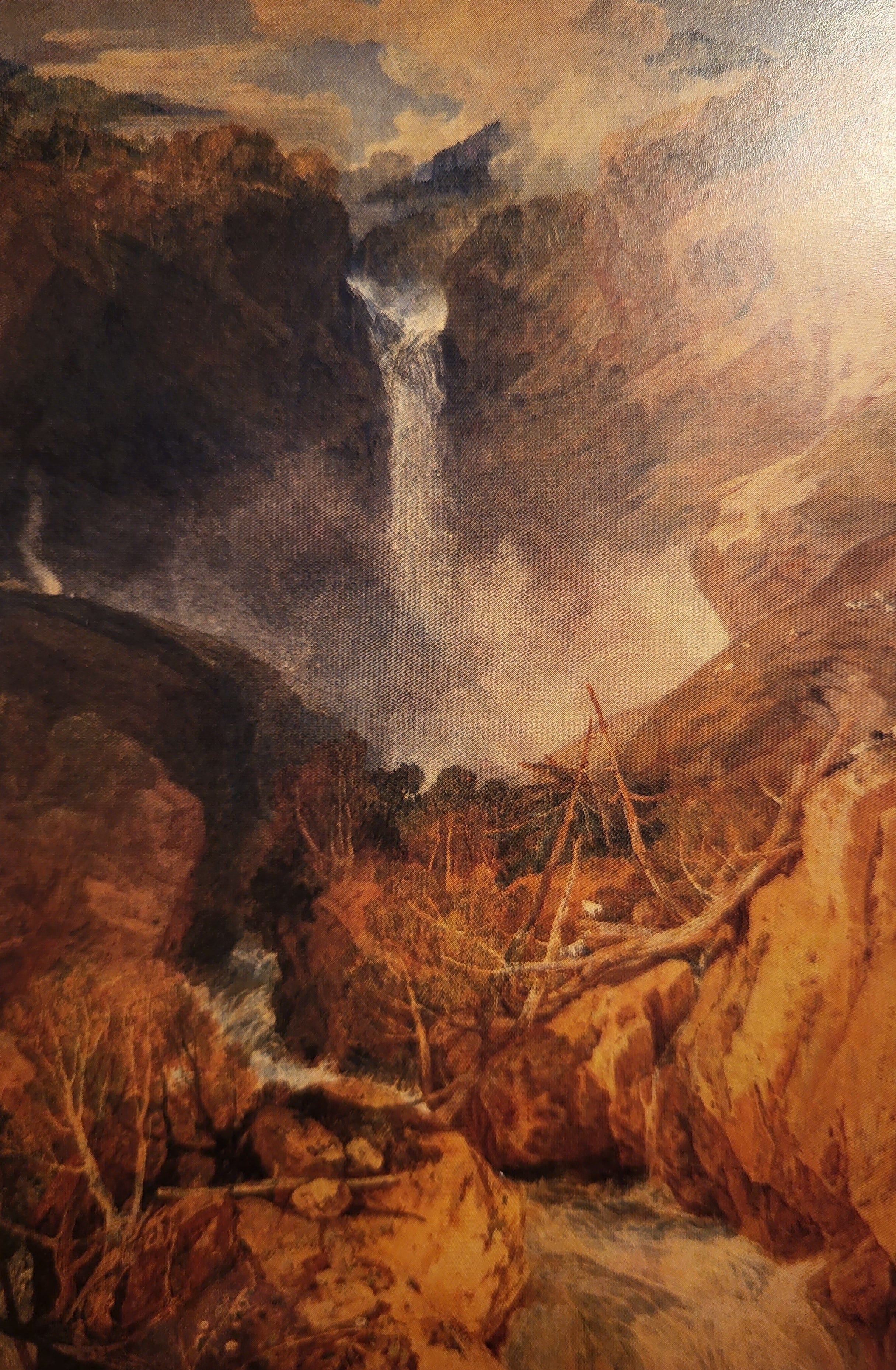
Fall of the Reichenbach, Oberhasli, Switzerland. 1804.
During his early twenties he spent his summers touring Britain and Europe, sketching profusely as he went. He would return to his home for the winters to work his magic turning sketches into paintings.
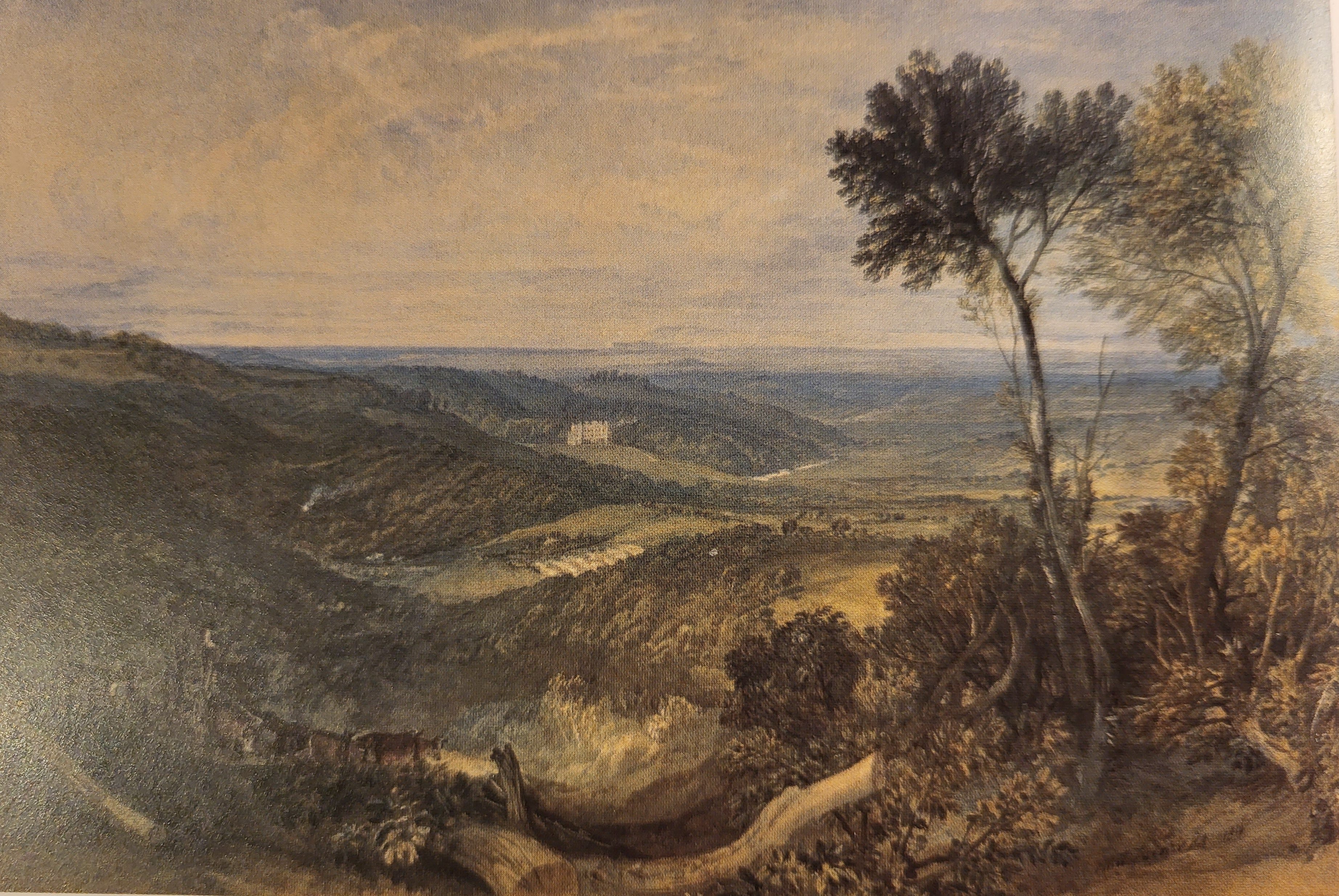
The Vale of Ashburnham. 1816.
Turner never married, yet was apparently the father of two daughters Evelina and Georgiana, with his housekeeper Sarah Danby. At the age of 75 he died of cholera, leaving a fortune to support “Decayed Artists”, and his paintings to the Nation. In a little over 60 years he had originated over 550 oil paintings, 2000 watercolors, and 30,000 works on paper. Almost six decades after his passing, the greater part of his bequest was installed at the National Gallery of British Art.
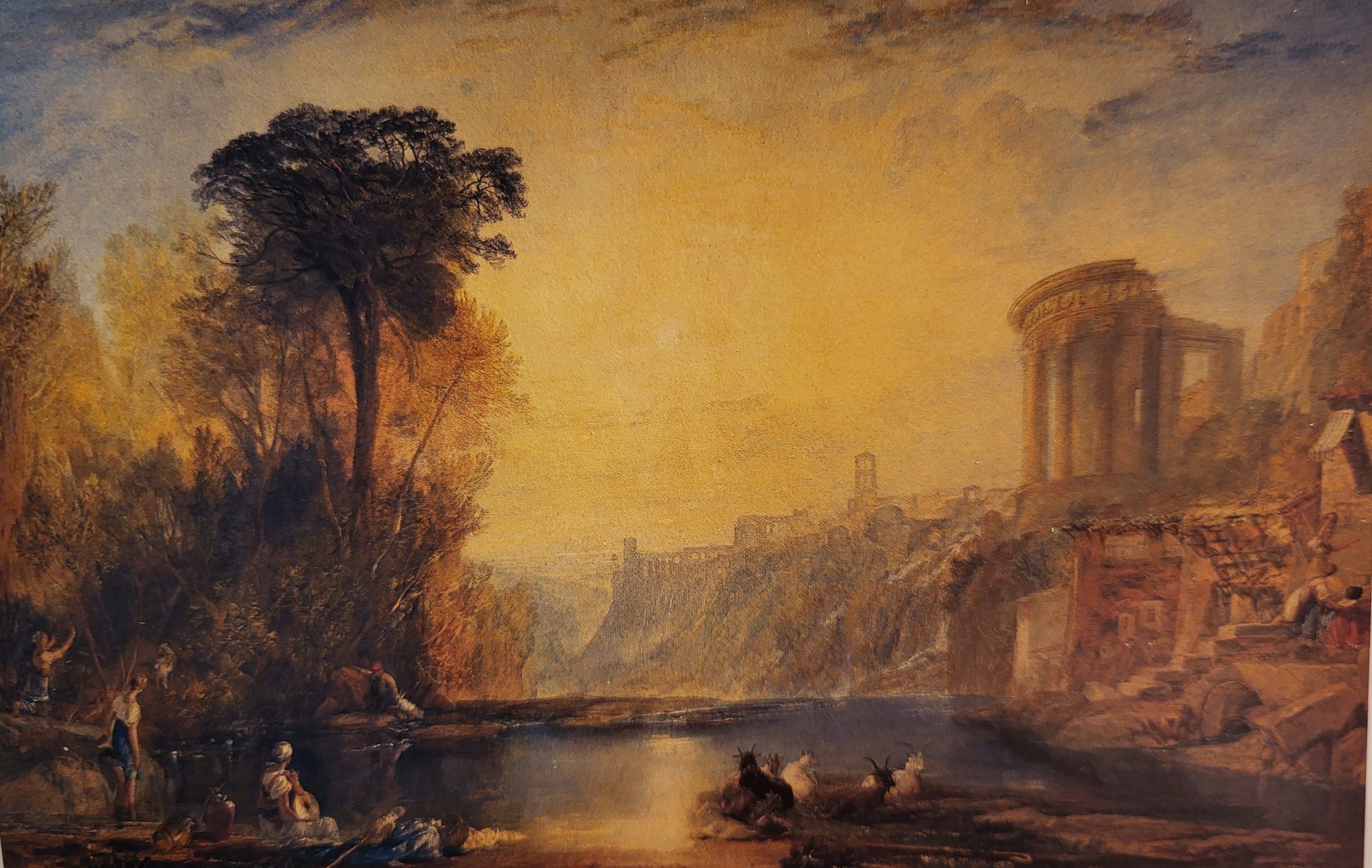
Composition of Tivoli. 1817.
A public poll, undertaken in 2005, by the BBC for Britain’s Greatest Painting, settled on Turner’s “The Fighting Temeraire”. This painting can be seen behind a portrait of Turner himself, on the first British Twenty Pounds polymer banknote. I cannot help but wonder as to what Turner might have made of that…..
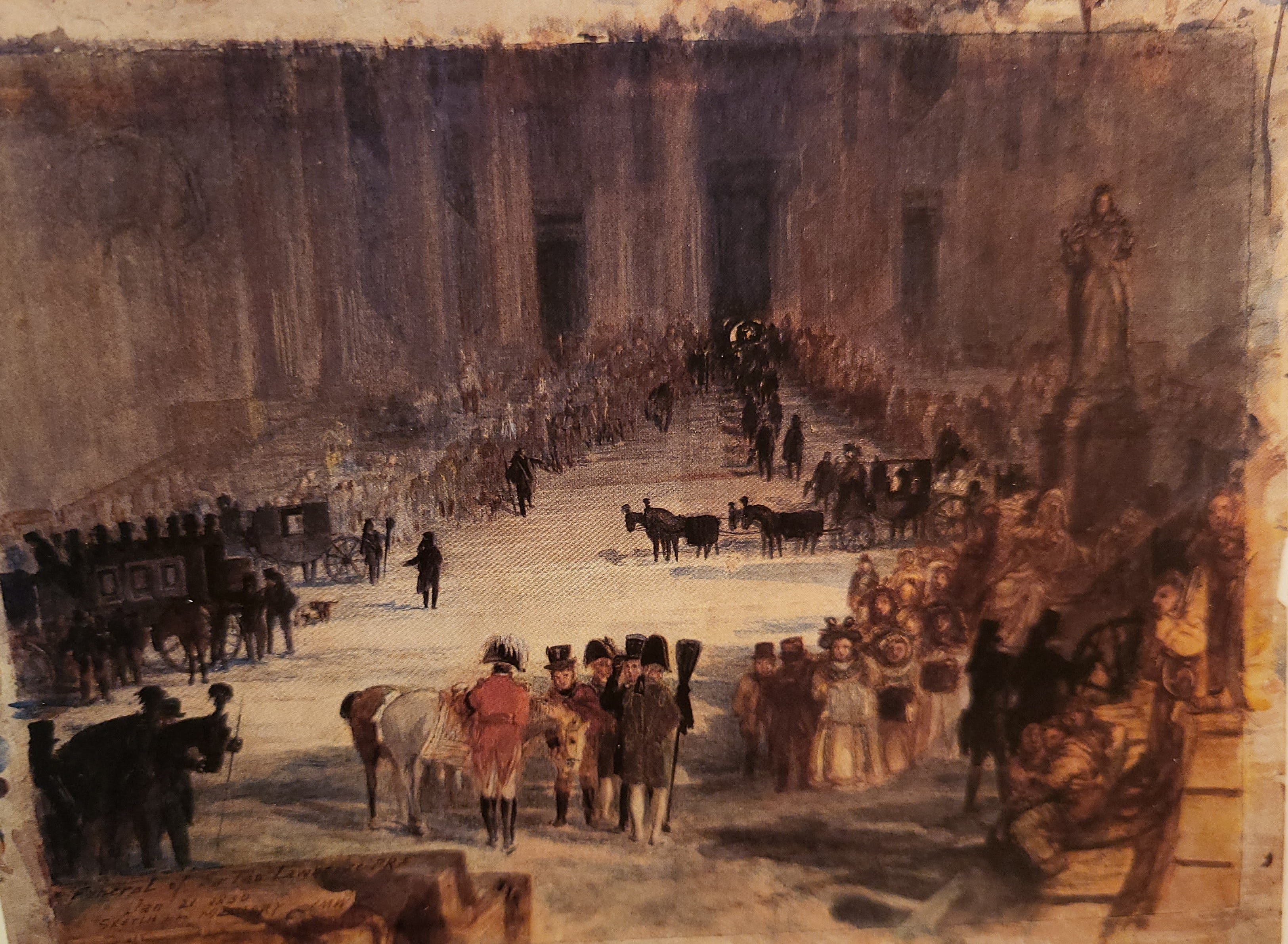
Funeral of Sir Thomas Lawrence. 1830.
I intend to mount some of the prints shown in this post, and to list them soon under Libre Libris. Thanks for your interest, Maurice.
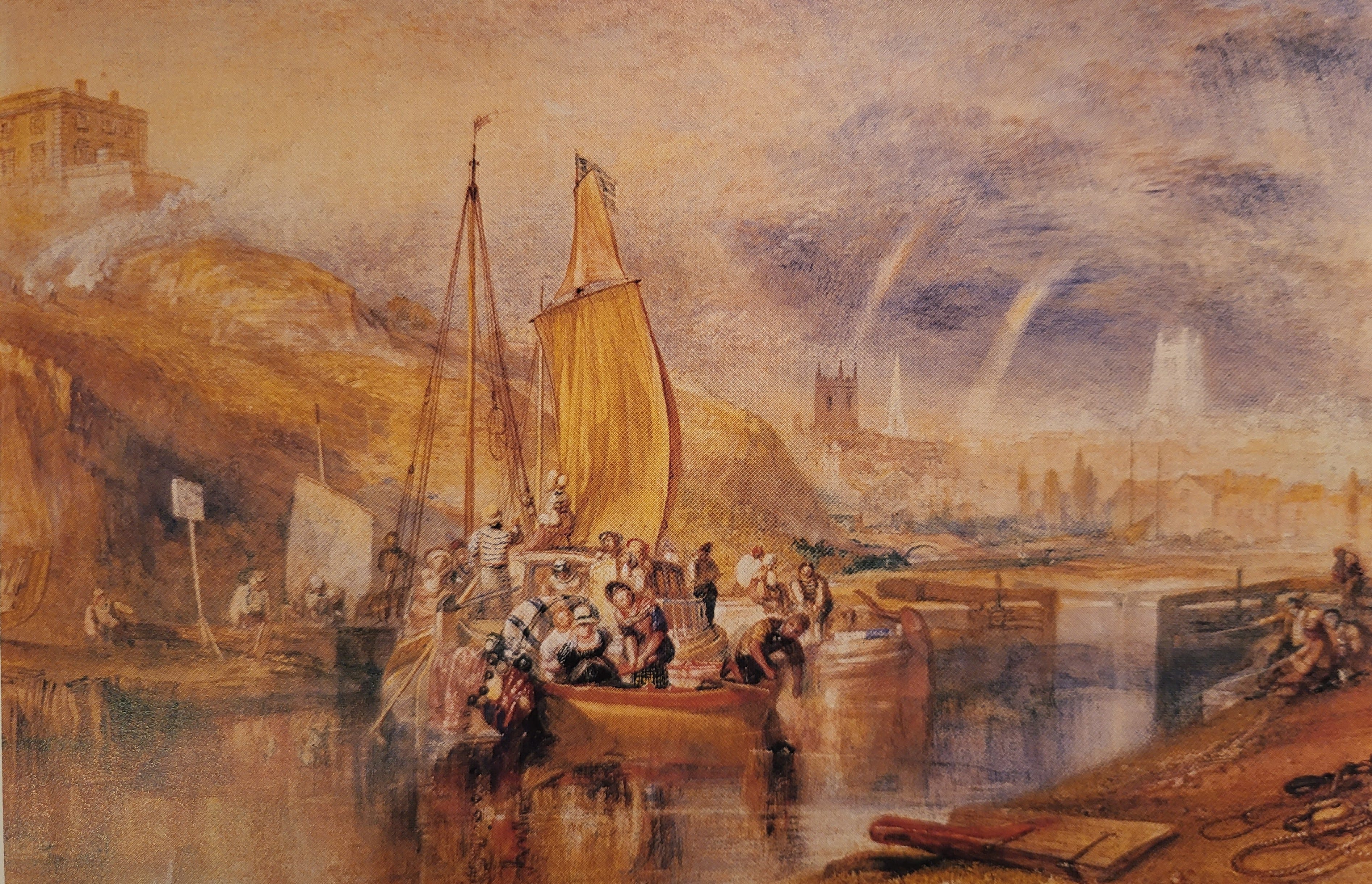
Nottingham 1832.
NeXt LIBRE LIBRIS, Sun 3rd Mar. A second Selection of Books, together with some Artprints. Offered Free and without postage to any address in the world. This is my way of saying thankyou to paid subscribers.
NeXt INSPIRATIONAL EPISODE, Weds 6th Mar. Antwerpen, Buskers Paradise.
NeXt HEAL OUR WORLD, Sun 10th Mar. T.B.A.
NeXt t’OTHERWITH TALE, Weds 13th Mar. A Uniformed sort of Madness.
See you on the Boulevard of Peace — That’s rich, Maurice. Meet you there!
Thank you for sharing these! I will share them with my sister-she is an amazing artist herself- I have not heard of this artist and I love his work. I do not know if she has. These are amazing & my favorite style! I dabbled in painting & sketches once upon a time- more as a hobby. What a wonderful artist!!